

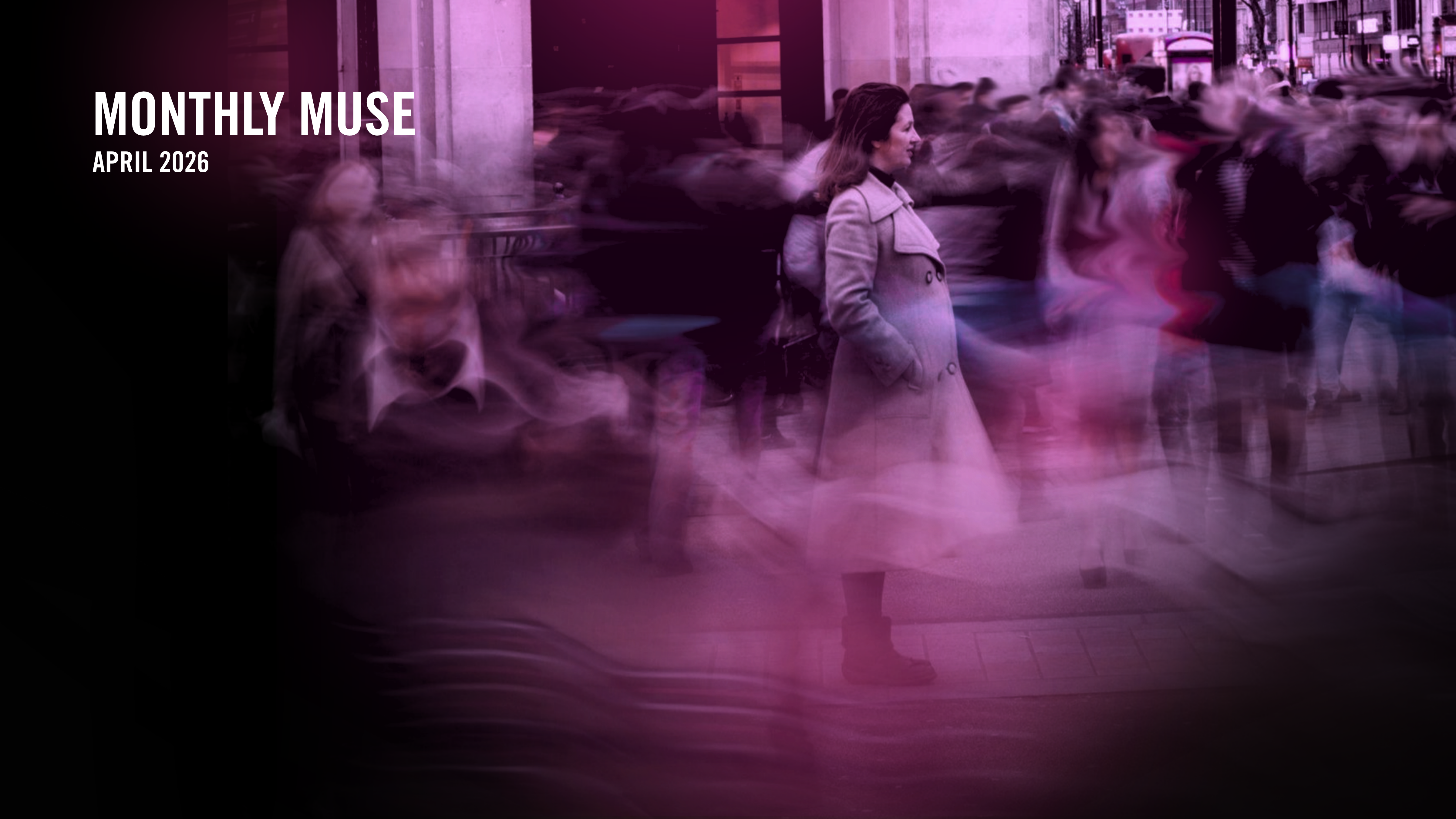
Should ‘the work’ get a rebrand?
By ‘the work’, I mean the personal, internal kind – not our jobs, but the quieter process of how we relate to ourselves and what we carry.
I heard something recently that’s been on my mind.
It was about someone who had found a way to see something like beauty in the middle of unimaginable pain – not to deny it, but to hold it in a different way, one that felt expansive rather than closing.
When ‘The Work’ Starts to Feel Heavy
‘They’ve done a lot of work,’ they said.
I remember feeling admiration for that, and then almost immediately something else. Not just tiredness, although there was that too, but more like an internal groan at what that seemed to ask – alongside a sense that they were able to hold something I can’t even imagine holding, and not really knowing what it would take to be able to do that.
Which then opens up a whole other set of questions: what is enough? What actually counts as ‘the work’? And how are you supposed to know which version of it to do?
Because what that phrase seemed to suggest was not only effort, but the right kind of effort – the kind that gets you somewhere.
Of course it takes effort, and that isn’t really the question. The question is whether the way we talk about it makes it feel heavier than it needs to be.
Somewhere in the middle of writing this, I realised I had that Rihanna line looping in my head – work, work, work, work, work – which is slightly unfortunate, given it’s also my go-to mum-dance track, and not, I suspect, quite what she had in mind.
But it did make me notice how I hear the phrase: as something constant, effortful, slightly relentless – something you’re meant to stay on top of, rather than something you can move in and out of.
Beyond Effort: The Shift from Doing to Being
And then, in the midst of musing on ‘the work’, I recorded a podcast with Myira Khan (coming soon), and found myself wanting to change the word entirely.
Not work, but something closer to being – because when you look more closely, a lot of what we call ‘the work’ isn’t only about effort, it’s about presence, the ability to stay with something rather than push through it.
Being with discomfort, being in nature, being with a therapist or with yourself long enough for something to shift. It still takes something, but it feels different – easier to lean into, perhaps, even when it isn’t easy.
We use the phrase constantly now. It has become shorthand for everything from therapy to self-reflection to healing more broadly, signalling seriousness, commitment and a willingness to look at yourself properly, and in many ways that framing matters.
Some of this is hard. It can be slow, repetitive and uncomfortable, and for many people – especially in recovery – that effort is real, necessary and hard-won.
But I wonder if that’s only part of the story.
Because what was being described didn’t only sound like effort. There was something in it that felt lighter than the words used to explain it, and when you look more closely, that side of it is everywhere.
What If It’s Not Just Work, But Something More?
I was reminded of something Dan Siegel shared at the last Common Threads community event – describing a severe horse-riding accident that left him close to death, and how it became a catalyst for a level of clarity and awareness that many people spend years, sometimes a lifetime, trying to reach through more deliberate practices.
Not because the experience itself is something to seek out, but because of what it revealed: that not all of this comes through effort alone.
It shows up in smaller, less obvious moments – being outside for longer than you planned, moving your body without turning it into a goal, letting yourself stay in a conversation instead of rushing on, picking up something you enjoy without needing it to be useful.
None of that feels like ‘work’, but much of it sits in the same space, and yet what we tend to emphasise instead is the endurance – the staying power, the ability to keep going when it’s difficult – which, taken on its own, makes the whole thing sound like something you have to brace yourself for.
Which might be part of the problem, because if the way in sounds like effort, discipline, discomfort, it’s not surprising that people hesitate; it can make the whole thing feel further away than it needs to be.
So perhaps the question isn’t whether ‘the work’ is the right description, but whether it’s the only one.
Because it is work, sometimes.
But it’s also something else.
Something that, at its best, doesn’t only ask more of you, but gives something back – a sense of space, a bit of ease, the feeling, occasionally, that something inside you has shifted.
We don’t talk about that side of it nearly as much, and maybe we should – not to soften the reality of what’s required, but to balance it, and to make it something people can move towards, rather than something they feel they have to brace themselves for.
Because if we only ever describe it as something to endure, it’s not surprising that people hesitate at the threshold.
And I’m starting to think I might describe it differently – less as ‘doing the work’, and more as being with.
I don’t know if we’ll stop saying ‘they’ve done a lot of work’. It’s too embedded for that, but I do wonder if, more often, what we’re really trying to describe is something quieter – that they’re able to be with themselves in it.
Warmly,
Emma
—
Emma Stapleton is our Managing Director.